
Learning the DevTools Universe
How do you know someone is a software developer? They'll tell you 😉

Over the past month, I’ve been deep in a rabbit hole I didn’t expect to enter: developer tools.
As someone who invests in infrastructure and AI, I can’t fully understand the evolution of the AI stack without understanding the world of the people building it. But until recently, I knew very little about how software actually gets built.
So, I decided to study the DevTools space by reading everything I could, mapping the ecosystem, and talking to founders who live in it every day.
In this post, I’ll do my best to quickly provide an overview of what DevTools are — and the areas that stood out as most interesting for me as an investor.
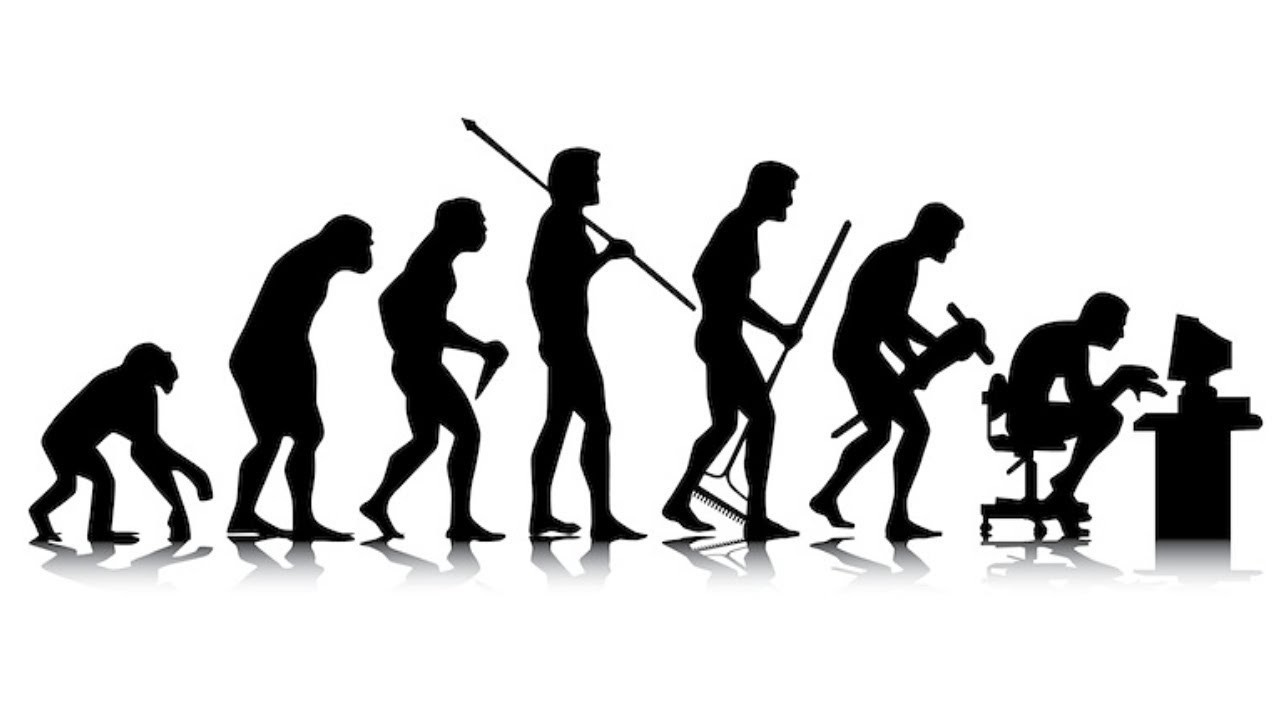
So… what are “DevTools”?
At their core, developer tools are the infrastructure of creation — the software that builds software.
They’re the invisible scaffolding behind every product we use: the code editors (VS Code, JetBrains), the testing frameworks (Jest, Cypress), the infrastructure orchestration tools (Terraform, Pulumi), the observability dashboards (Datadog, Chronosphere), and the security layers (Wiz, Snyk) that keep it all running safely.
Historically, DevTools were about automation — writing and deploying code faster, more reliably, more repeatably.
Nowadays they’re also about augmentation — using AI to make developers more creative, autonomous, and efficient.
Developer as an Identity
The space is fascinating because developers are one of the personas furthest along the AI adoption curve.
They’re using AI to eliminate the parts of their job they dislike (debugging, testing, documentation) and amplify the parts they love (designing, architecting, creating). It’s one of the few markets where adoption isn’t top-down — it’s usually driven by frontline engineers who build, test, provide feedback on, and adopt new tools in a way that has no parallel in other enterprise job functions.
What I realized in my research (and reflecting on my own experiences) is that being a software developer is often much more core to someone’s identity than, say, being a marketer, business developer, or product manager.
This is a generalization, but it’s far more likely you’ll find developers spending nights and weekends on side projects — like building an app to better manage their finances — than you would find someone in marketing experimenting with new strategies outside their day job.
Some dev tools investors told me (before I joined Propeller) that the best DevTools companies resemble the best D2C brands. Now I totally get it.
The DevTools market reminds me of a market like running apparel:
they both sit at the intersection of function and identity - The emotional reward isn’t just the output (miles or commits), it’s feeling like a “real runner” or “real engineer.”
they rely on community drive loyalty - I’m thinking Strava and Discord chats, or run clubs and developer meet-ups.
the best brands end up with a combination bottoms-up, viral adoption + strategic evangelism — an influencer runner or a popular GitHub repo can make or break adoption trends.

Why It’s So Interesting Right Now
We’re living through what feels like the third great era of DevTools:
Infrastructure Age (2005–2015) – cloud, containers, and CI/CD
Experience Age (2015–2023) – collaboration, developer experience, PLG
Intelligence Age (2023–2030) – AI-native, agent-driven development
In this new “intelligence” phase, the tools themselves are becoming cognitive collaborators.
AI agents are now “members” of engineering teams — debugging, generating, reviewing, and even deploying code alongside humans.
Developers increasingly talk about their copilots or agents the same way they’d talk about a junior engineer. And that opens a world of new infrastructure problems to solve — ones we haven’t encountered before.
If you’re interested in learning more, I have a full ~90-page primer on the DevTools market that I’d be happy to share — just drop me a note.
Where I’m Most Curious as an Investor
After reading, mapping, and talking to early founders in this space, here are the areas I find most compelling right now — framed around the trends that stood out most clearly.

🧠 1. AI Agents as Teammates
As AI agents become autonomous contributors inside engineering teams, we’ll need tools that help humans and agents collaborate, trust, and verify each other’s work.
I’m interested in:
Agent collaboration and supervision frameworks (human ↔ agent and agent ↔ agent).
Context transmission — tools that pass business and technical context seamlessly between humans and machines.
Agent monitoring and analytics — measuring accuracy, speed, and security of autonomous code changes.
⚙️ 2. Reusable, Portable Software
One of the biggest AI-era challenges is the explosion of generated code. We’re producing more code than ever — but managing, debugging, and deploying it not only remains messy, but constitutes a problem that scales exponentially as code bases do.
I’m drawn to startups working on:
Universal code abstraction — write once, reuse anywhere.
Simplified best-practice enforcement — debugging, testing, and storage that scale without overwhelming developers.
🧩 3. Tools That Do the Boring (and the Fun) Stuff
Developers are automating away what they dislike most — setup, testing, documentation — so they can spend time on creative work.
I love the elegance of that.
It’s not “AI replacing humans,” it’s AI giving humans more space to create.
But AI is also enabling humans to be more creative with that space.
To use another analogy from a different industry and a different tech wave - the digitization of music creation:
Removed the boring parts: Digital Audio Workstations (DAWs) automated recording, mixing, looping, and instrument sampling — no more costly studio time, tape splicing, or manual equalization.
but also enhanced the creative side: Producers gained new creative tools — effects plugins, MIDI sequencing, pitch correction, AI mastering, and generative synths — that expanded what music could sound like.
Grounding this analogy back to dev tools, AI doesn’t just eliminate debugging — it lets developers compose new kinds of software (multi-agent systems, natural language interfaces) that weren’t possible before. Replit is one of the world’s fastest growing companies on the premise that developers (and aspiring software creators - more on that below) want to build more, faster.
🌍 4. Expanding Who Gets to Build
As tools become more abstracted and AI handles the heavy lifting, more people can now “develop” software — even without traditional programming backgrounds.
That democratization is powerful.
If I continue to pull on my earlier comparison between developer tools and running gear, this could be for software development what the explosion of jogging as a hobby was for the rise of Nike.
Before the 1970s and 80s, running was the niche pursuit of college and professional athletes. After that boom, “jogging” became a mainstream hobby for physical fitness — one that today over 50 million Americans take part in.
The number of software developers globally grew by roughly 70% from 2022 to 2025, and I’d imagine that growth will continue as AI abstracts away the barriers to getting started with building software.
I’m interested in:
Low-code / pseudo-developer tools that allow anyone to create production-grade products.
Upskilling and onboarding platforms that give new engineers instant project context.
Remote collaboration platforms that make distributed teams feel in-sync.
What I’m Learning (and Still Don’t Know)
It goes without saying that I’ve barely scratched the surface of the DevTools space. The deeper I go, the more I realize how much culture and nuance exist in how developers actually use these tools — what they adopt quickly, what they ignore, and what earns loyalty.
So with that, consider this an open invitation:
If you’re a founder building in DevTools, or you’ve spent your career deep in developer experience, platform engineering, or AI-assisted coding — I’d love to learn from you.
If you’re an investor exploring this space, I’d love to compare notes and share perspectives on what’s emerging at the intersection of AI, infrastructure, and human-in-the-loop engineering.
And if you’re a developer reading this, I’d love your feedback:
What tools do you love?
What’s broken in your workflow?
What’s overhyped and what’s quietly transformative

I’m still early in my learning journey — but this feels like one of the most exciting, creative, and consequential spaces in technology right now.
Thanks for reading — this essay is part of my ongoing series on learning new corners of the tech ecosystem, from AI infrastructure to the tools empowering the people who build the future.